This masjid is kept open by the people who pray in it. We would rather ask you plainly than dress it up.
There are no running totals on this page. You will not find a fundraising thermometer here, or a figure raised so far.
What follows instead is a description of the work your giving pays for, an honest explanation of how the different kinds of giving are treated, and a straightforward way to give.
Section 01
What your giving does
Not a list of projects looking for sponsors. This is the ordinary work of an open building, which happens every day whether or not anybody is fundraising for it.
01
Keeping the doors open and the building warm
A masjid opens for five prayers a day, every day of the year, and that is the part of the work nobody fundraises for. Heating a hall of this size is the most relentless thing the masjid pays for, and it goes up every winter. Alongside it sit the lighting, the hot water for wuḍū, the cleaning, the insurance, the safety checks, and the repairs a building of this size will go on needing.
Heat, light and hot water
Cleaning
Insurance and safety checks
Repairs and grounds
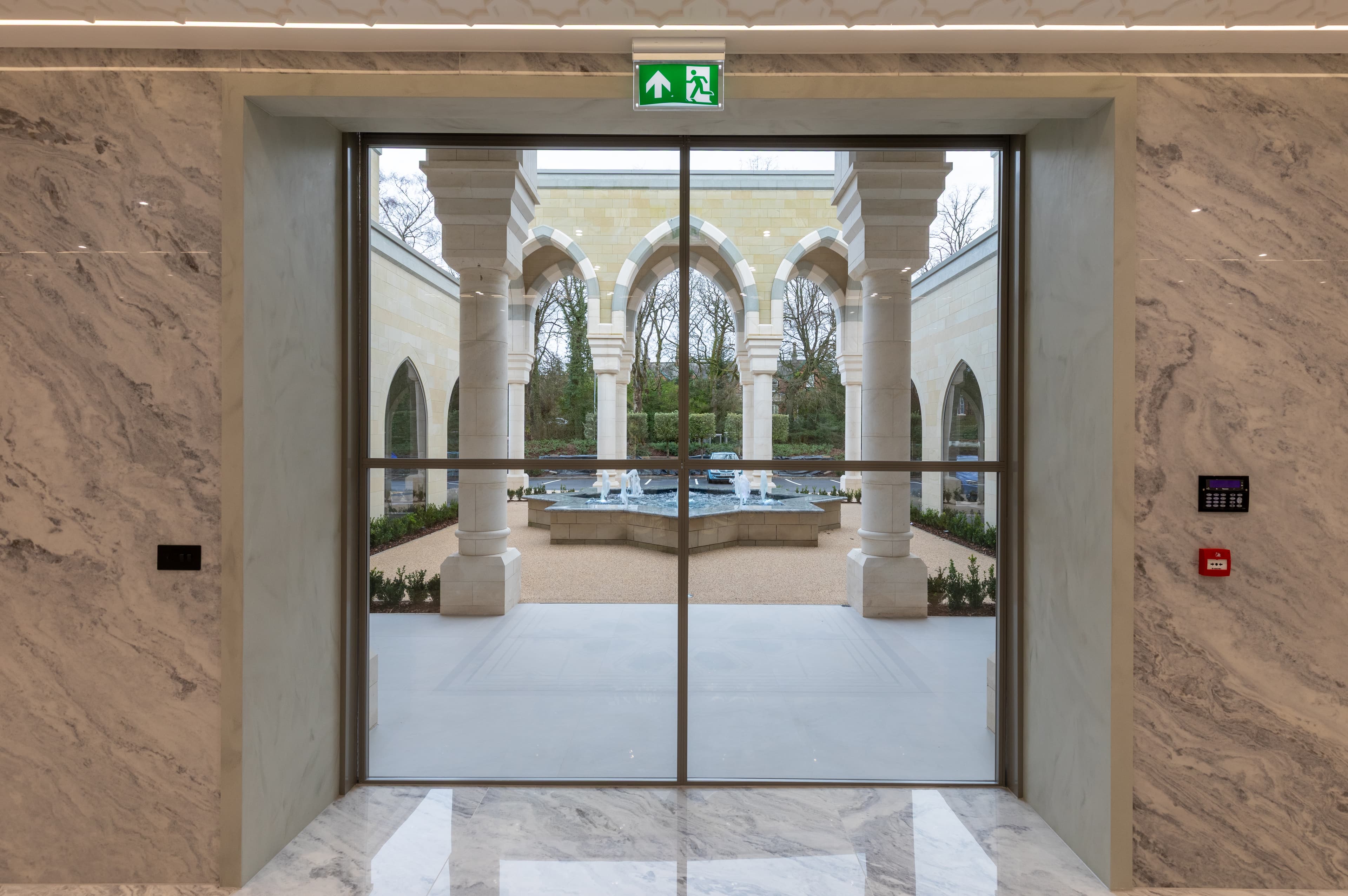
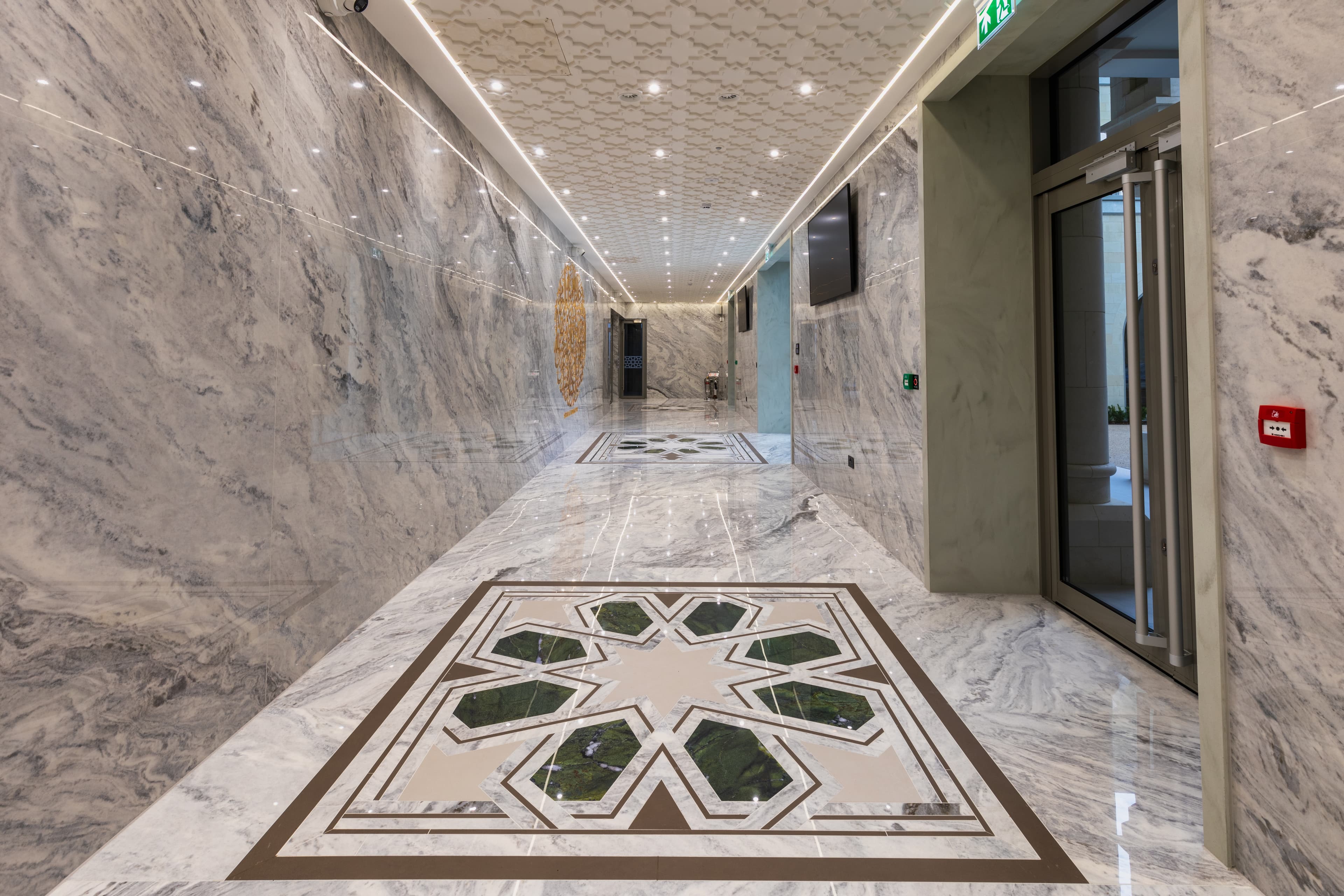
The lobby doors onto the courtyard.
02
The imāms, and the teaching they do
Five adhāns and five jamāʿahs a day is the visible part. Around it sit the Friday khuṭbah, the teaching circles, and the Qaṣīdah Burdah gatherings. Then there is everything unscheduled: the phone call about a death, the couple who need someone to sit with them, the young man who wants to take his shahādah on a Wednesday afternoon. That is a job, and it is paid like one.
Five jamāʿahs a day
The Friday khuṭbah
Shahādah and counselling
Bereavement and janāzah
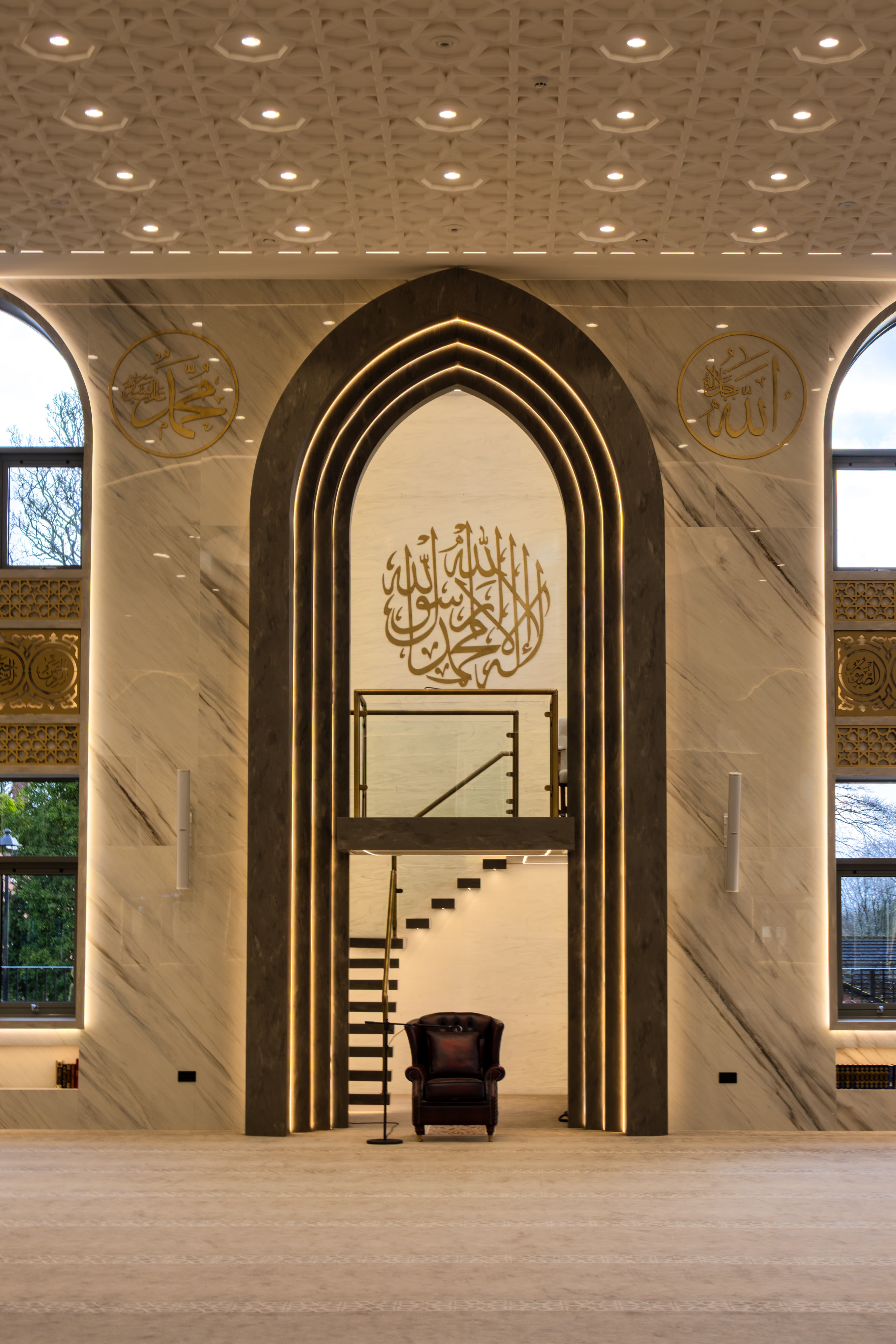
The miḥrāb and the minbar.
03
The madrasah, and the teaching of children
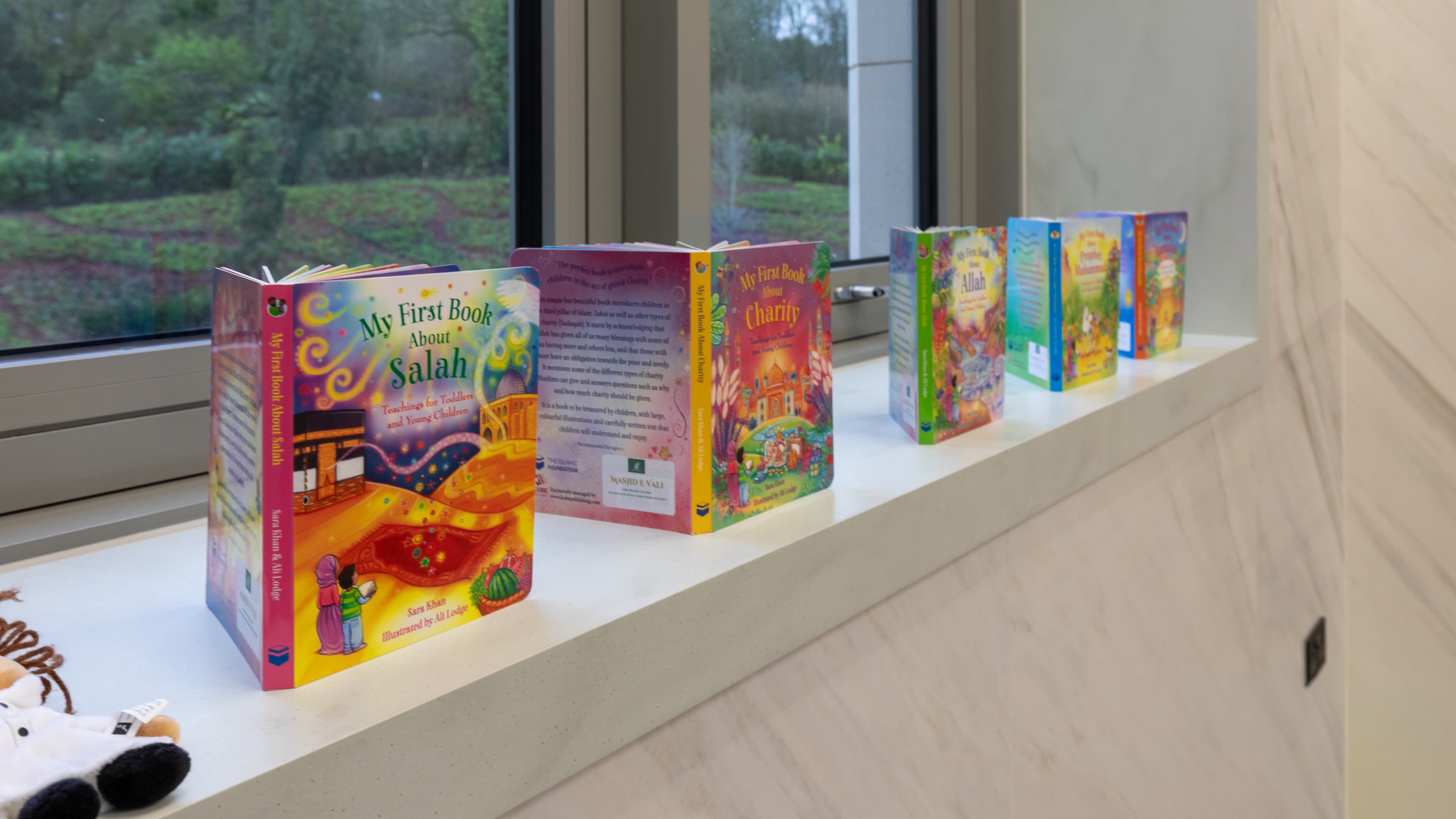
The madrasah is the reason a good number of families are in this building at all. It is staffed, and it carries safeguarding obligations that are not optional and are not free. Books wear out and get replaced; materials have to be bought before a single lesson is taught.
Madrasah classes
Safeguarding and DBS
Books and materials
Teachers
The madrasah windowsill.
04
The food bank, and quiet hardship support
The food bank provides essential supplies to families in need across Blackburn, distributed in partnership with local organisations. Volunteers do the lifting. The giving pays for the stock that has to be bought when donations do not stretch, and for the hardship support that goes out quietly alongside it when a household needs more than a parcel.
Food parcels
In partnership with local organisations
Hardship support
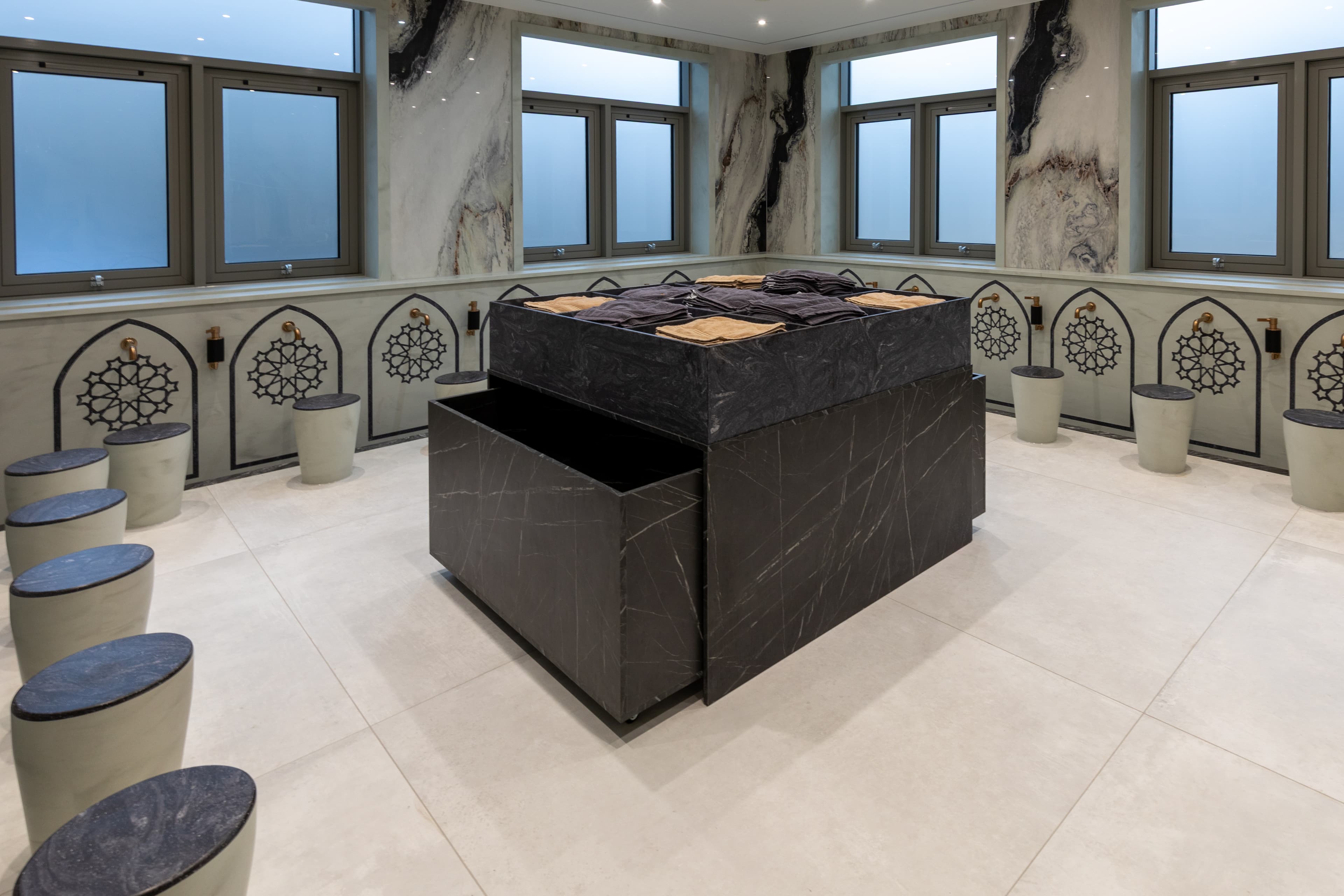
The wuḍū hall.
05
Keeping the masjid open to anyone who walks in
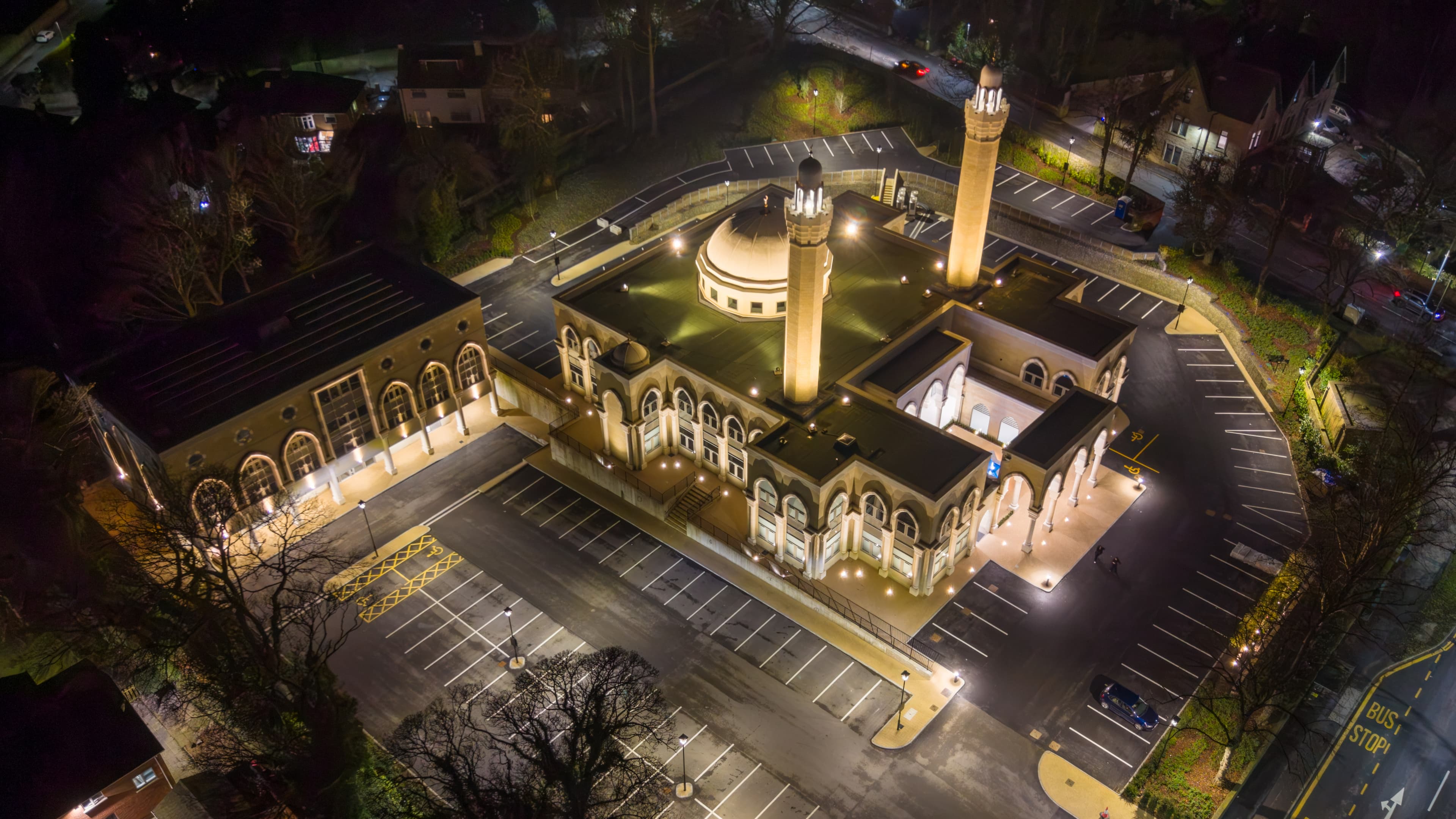
School groups, interfaith visitors, students, neighbours who have driven past the minarets for two years and finally parked. Somebody has to meet them, walk them round, answer the same six questions with patience, and lend them a scarf. It is the least defensive thing this building does, and it is worth paying for.
School and community visits
Interfaith and civic visitors
New Muslims
Guided visits
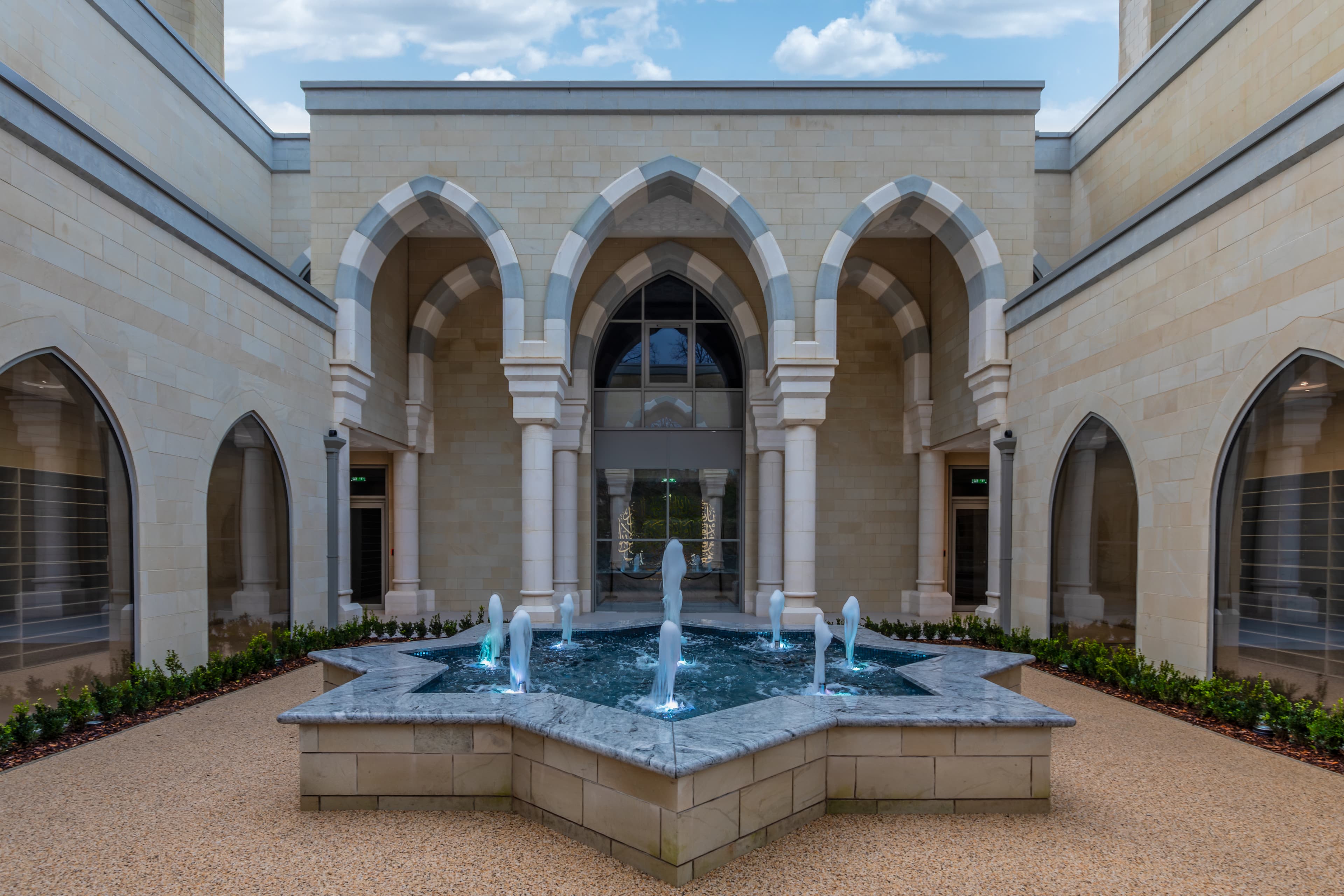
The courtyard, where most visits begin.
Section 02
The kinds of giving
These are not four words for the same thing. They carry different obligations and they may not be spent on the same things, so it matters that you tell us which one you mean — and that we act on it.
زكاة
Zakāt
Obligatory
Zakāt is a duty, not a donation. It falls on Muslims whose qualifying wealth has sat above the niṣāb for a lunar year, and it is calculated at 2.5% of that wealth rather than of income. If you are not sure whether you owe it, that is a question for the imām, and asking costs nothing.
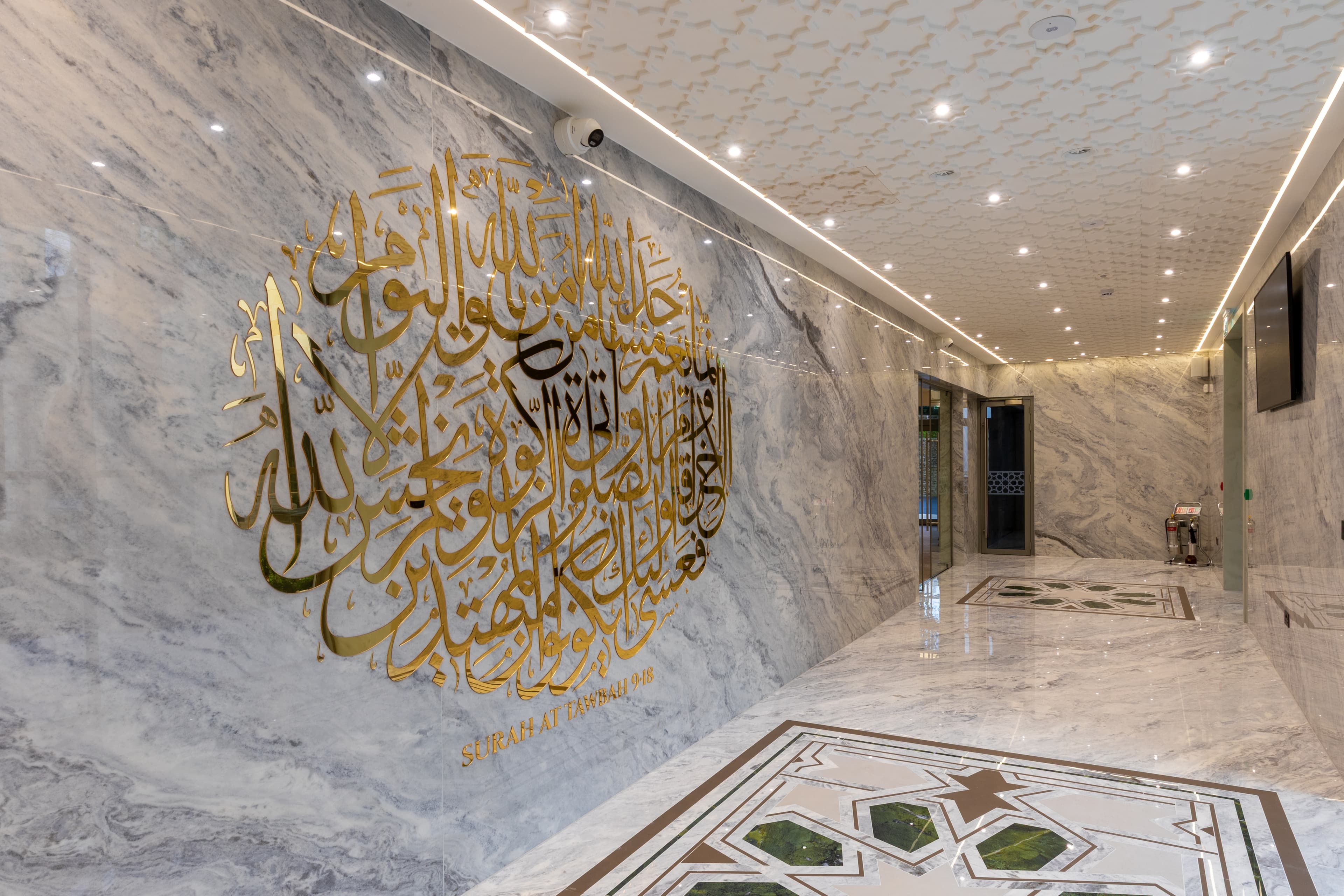
The Qurʾān names eight categories of recipient in Sūrah at-Tawbah — the poor, the needy, those in debt, travellers in need, and others — and zakāt may go to those and no further. That rules out a great deal of what a masjid spends money on.
Zakāt given here is kept entirely separate from the mosque’s general running costs. Eligibility is checked against Islamic guidelines, and it is distributed to eligible recipients within the Blackburn community.
صدقة
Ṣadaqah
Voluntary
Ṣadaqah is anything given voluntarily, by anyone, in any amount, at any time. There is no threshold to cross and no calculation to do. A pound put in the box on the way out is ṣadaqah; so is paying for somebody else’s shopping.
Because it carries no restriction, ṣadaqah is the most useful money a masjid receives: it can be directed to whatever is most pressing — the food bank, hardship support, or a repair that cannot wait.
لله
Lillah
For Allāh’s sake
Lillah is given purely for the sake of Allāh, with nothing expected in return — no name on a plaque, no acknowledgement, no obligation created in the person receiving it.
Unlike zakāt, it is not restricted to the eight categories, which means it can be spent on the fabric and the running of the masjid itself. Most of what keeps a building like this heated, lit, cleaned and staffed is lillah, given by people who will never be thanked by name for it.
صدقة جارية
Ṣadaqah Jāriyah
Ongoing charity
Ṣadaqah Jāriyah is charity that keeps working after the giving is done, and whose reward continues for as long as what you paid for is still in use. A well that still draws water. A book that is still being read. A hall that is still being prayed in.
It is how the things that outlast a single year get paid for — the fabric of the building, the madrasah books, the wuḍū facilities. Many people give this way in the name of a parent who has died.
If you are genuinely unsure which of these applies to you — and plenty of people are, including people who have been giving for decades — ask to speak to one of the imāms. Nobody will ask you for money during that conversation. It is not a fundraising call and we do not treat it as one.
If you have already given and want a gift re-designated, tell us and we will move it. That is a correction, not a favour.
Gift Aid is a government scheme that lets a charity reclaim the basic-rate tax you have already paid on the money you gave. It is worth understanding properly, because it is free money that a great many people leave on the table.
Who is eligible
Anyone who pays UK income tax or capital gains tax. You must have paid at least as much tax in the tax year as every charity will reclaim on all your gifts that year — that is a quarter of what you give. It has nothing to do with how much you earn and everything to do with whether you pay tax.
What it means for you
Nothing leaves your pocket. You are not paying more, and you are not signing up to anything ongoing beyond a declaration you can withdraw whenever you like. Every £1 you give becomes £1.25 to the masjid, and HMRC pays the difference out of tax you have already handed over.
What the masjid claims
We claim only on gifts from people who have made a declaration, and only for as long as that declaration stands. We do not claim on money collected in the boxes, on ticket sales, or on anything where the giver cannot be identified — the rules do not allow it, and we do not stretch them.
When to tell us to stop
If you stop paying enough tax, change your name, or move house, let the office know. If you no longer pay tax and a claim has been made, HMRC comes to you for the difference, not to us — which is exactly why we ask you to leave the box unticked if you are not certain.
Whether it changes what you gave
It does not. Gift Aid is money from HMRC, not from you, and it is added on top of the gift you made. If you would rather we did not claim on a particular gift, say so and we will not.
Section 04
Giving online
Three steps, then a chance to check it over before anything is recorded. You can stop at any point and nothing is sent.
Choose an amount, and whether it is one-off or monthly.
Choose where it should go.
Add Gift Aid, if it applies to you, and your details.
No card details are entered on this site and none reach the masjid. This records your pledge so the office can follow it up with you.
Masjid E Vali, Preston New Road, Blackburn. Kept open by the people who pray here, one Friday at a time.
Section 05
Other ways to give
Online is the easiest for the masjid to record and reconcile, but it is not the only way, and for some kinds of giving it is not the best way.
A standing order
The most useful thing you can set up. A steady monthly amount, however modest, lets the masjid plan a year rather than react to one — it is the difference between budgeting for the winter and hoping for it. You keep full control: it is your instruction to your own bank, and you can change or cancel it without telling us.
You can give at the masjid itself, and ask for a receipt — do ask, because we will not assume. If you would like to give zakāt in person and talk it through with an imām first, contact the office beforehand so that someone is free to sit with you.
A legacy is ṣadaqah jāriyah in its plainest form, and for many families it is the largest gift they will ever make. It costs nothing during your lifetime and can be added to an existing will with a short codicil.
Your solicitor will need the masjid’s full registered name, address and charity number. Ask the office and you will be given all three in writing. We would rather you looked after your own family first.
Masjid E Vali is a registered charity, operating under the governance requirements of the Charity Commission for England and Wales.
Annual accounts are independently examined and published in line with charity reporting standards. Donors can request a copy at any time — you do not need a reason, and you will not be asked for one.
The board of trustees meets quarterly to review operations, finances and community feedback, so that the masjid continues to serve its charitable objectives.
Finally
Give what you can, quietly
No list of donors is published, no board is engraved, and no amount is ever read out.
Monthly giving is worth more to the masjid than the same money given once, because it can be planned against. But a one-off gift is welcome and always has been.
 Masjid E Vali